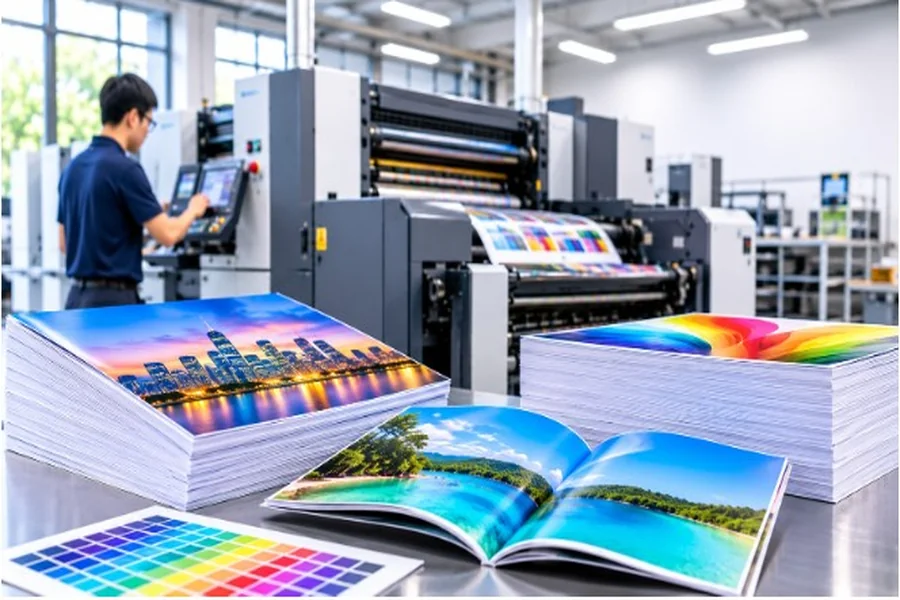
Printed materials remain an important part of how businesses present themselves. From brochures and business cards to product catalogues and marketing displays, the quality of printed items influences how customers perceive a brand. Even when most communication takes place online, physical materials still have a role in sales meetings, events, retail environments and everyday business operations.
For companies in Singapore, achieving high quality printing in Singapore involves more than finding a supplier with competitive prices. Colour accuracy, paper selection, finishing and production consistency all affect the final result. Understanding these factors helps businesses choose a printing service that produces professional-looking materials suited to their intended purpose.
Why Print Quality Matters for Businesses
Printed materials often create an early impression of a business. A well-produced brochure, for example, gives customers a clear and organised introduction to a company’s products or services. A poorly printed version with faded colours, uneven trimming or unclear text can make the same information harder to read and less appealing.
Consistency is equally important. When a business orders business cards, flyers and product catalogues, the colours and overall presentation should reflect a recognisable visual identity. Noticeable differences between print batches can affect how cohesive the brand appears.
Good printing also supports practical use. Text needs to remain legible, images should retain sufficient detail, and materials should be durable enough for their intended setting. A menu used repeatedly in a restaurant has different requirements from a one-time promotional flyer distributed at an event.
Choose the Right Printing Method
Different printing methods suit different quantities and requirements. Digital printing is often used for short runs, personalised materials and jobs that need a relatively quick turnaround. It is useful when businesses want to produce a limited number of brochures, flyers or cards without committing to a large quantity.
Offset printing is commonly considered for larger production runs. It involves transferring ink from plates onto a surface and can be suitable when businesses need consistent output across many copies. The preparation process means it is generally less practical for very small orders, although the overall cost per copy can become more attractive at higher quantities.
The right method depends on the project. A printing provider should be able to explain which process suits your order based on the quantity, material, colour requirements and deadline. Avoid choosing a method based on price alone if the final appearance is important.
Select Paper and Materials Carefully
Paper choice affects how a printed item looks, feels and performs. A lightweight stock might be suitable for flyers intended for broad distribution, while a thicker material often works better for business cards, presentation folders or premium promotional items.
Coated paper generally has a smoother surface that helps produce sharper images and more vibrant colours. Uncoated paper has a more natural texture and is often chosen for materials where readability and a less glossy appearance are preferred.
Businesses should also consider the environment in which the material will be used. A menu or product card that receives frequent handling might need a more durable stock or protective finish. Packaging inserts and instruction sheets have their own requirements, particularly when they need to remain readable during storage or transport.
If you are uncertain, request paper samples from the printer. Comparing the actual materials is more useful than relying on descriptions alone.
Understand Colour Accuracy and Image Resolution
Colour consistency is one of the more important aspects of high-quality printing. Colours displayed on a computer monitor might not appear exactly the same when printed because screens use light to produce colour, while printers use ink or toner on a physical surface.
Professional printers often work with colour management processes to keep output consistent. They might also request files in a particular colour mode, depending on the equipment and production requirements. If a brand uses specific colours, provide the relevant colour references and ask how closely the printer can reproduce them.
Image resolution matters too. Photographs and graphics that look clear on a screen might appear blurred or pixelated when enlarged for print. Supplying appropriately sized, high-resolution images helps preserve detail.
Before approving a large order, consider requesting a proof. A digital proof allows you to review layout and content, while a physical proof gives you a better indication of the printed colours, paper and finish.
Consider Finishing Options
Finishing gives printed materials their final appearance and can improve durability. Common options include lamination, binding, folding, die-cutting and spot finishes.
Matte or gloss lamination adds a protective layer to suitable printed items. Matte finishes produce a less reflective surface, while gloss finishes create a brighter appearance. The choice depends on the design and how the material will be handled.
Binding options are relevant for reports, booklets and catalogues. Saddle stitching might suit thinner publications, while other binding methods are more appropriate for thicker documents. Folding is commonly used for brochures, while die-cutting allows materials to be produced in specific shapes.
Not every project needs elaborate finishing. The most suitable option is one that supports the purpose of the item without adding unnecessary production costs.
Prepare Artwork Before Sending It to Print
A well-designed file can still produce disappointing results if it has not been prepared correctly. Before submitting artwork, check the document size, image resolution, bleed and safe margins. Bleed allows background colours and images to extend beyond the trimming line, reducing the chance of unwanted white edges after cutting.
Text should be checked carefully for spelling, punctuation and layout issues. Pay attention to small details such as contact numbers, website addresses, prices and promotional dates. These mistakes are often more expensive to correct after printing has started.
Ask the printing provider about its preferred file format and submission requirements. Some jobs might require PDF files with embedded fonts, while others have different specifications. Following the printer’s guidelines helps reduce delays and avoid unnecessary revisions.
How to Choose a Printing Company in Singapore
When comparing printing companies, look at their experience with the type of material you need. A supplier that regularly produces corporate brochures might be a suitable choice for a catalogue, while another printer could specialise in packaging, labels or large-format displays.
Ask for samples of previous work and check whether the company offers artwork assistance, proofing and delivery. Turnaround time is another consideration, particularly when printed materials are needed for an event or product launch.
Request a detailed quotation that states the quantity, paper type, printing method, finishing options and delivery charges. This makes it easier to compare suppliers on similar terms rather than focusing on a headline price that might exclude important services.
Clear communication is also valuable. A reliable provider should explain production requirements, flag potential artwork problems and give you a realistic completion schedule.
Final Thoughts
High-quality printing helps businesses present information clearly and maintain a consistent brand image across physical materials. The result depends on several decisions, from choosing the right printing method and paper to preparing artwork and selecting suitable finishing.
When looking for a printing service in Singapore, compare providers based on their experience, production standards and ability to meet your requirements. A clear quotation, proper proofing process and reliable communication help reduce mistakes and produce printed materials that are fit for purpose.